


I’ve never written a line of code in my life. And yet every week, I build my own tools.
Back in July, Elena Verna described a scene she keeps running into. Someone tells her AI has changed their life, and she answers: “Cool. Show me.” Most of the time… there isn’t much to see 😅
You get asked that question too. By your CEO when you pitch an idea. By your next hiring manager when they read “AI-fluent” on your résumé.
For twenty years, marketing had one thing to show: a slide, a mockup if you were lucky. Then you wrote a brief, opened a ticket, and waited for engineering to find the time.
Those days are over. Today, showing an idea takes ten minutes, even if you can’t code. For the first time, a marketer can demo an idea instead of spending a whole meeting defending it.
Your best idea is ticket #47
Take a simple example. You want an ROI calculator on your pricing page. You believe in it, you’ve even seen one on a competitor’s site.
You write the brief, you open a ticket… and your calculator lands in 47th place, behind the entire product roadmap.
Nobody’s at fault here. Engineers work on the features that make money, which is exactly what they’re paid to do.
The waiting isn’t the worst part. The worst part is every idea you stop pitching because you already know it’ll end up in 47th place. Those never show up in any report.
Try it: open your backlog and count the marketing tickets that have been sitting there for more than three months. Then ask yourself how many ideas never made it in at all.
Now the opposite case. Three weeks ago, I released a Momentum episode with Tim Soulo, CMO of Ahrefs. He’s never written a line of code either. That didn’t stop him from building himself, in one afternoon, a tool that shows which companies engage with his LinkedIn posts and matches every contact against Ahrefs data.
At Bulldozer, the best example is the webinar recap. “Recap” sounds small, but it’s a whole project:
an email with the key points from the discussion
a screenshot from the video
a PDF covering every takeaway in detail, with an appendix of audience questions and our answers
all of it on brand
and the attendees: we pull the list, enrich every contact, and load them into a HubSpot list so everyone gets the recap
It used to take one person at least two full days. Today, all of it is automated. The webinar ends, and ten minutes later the recap is ready. No engineer involved.
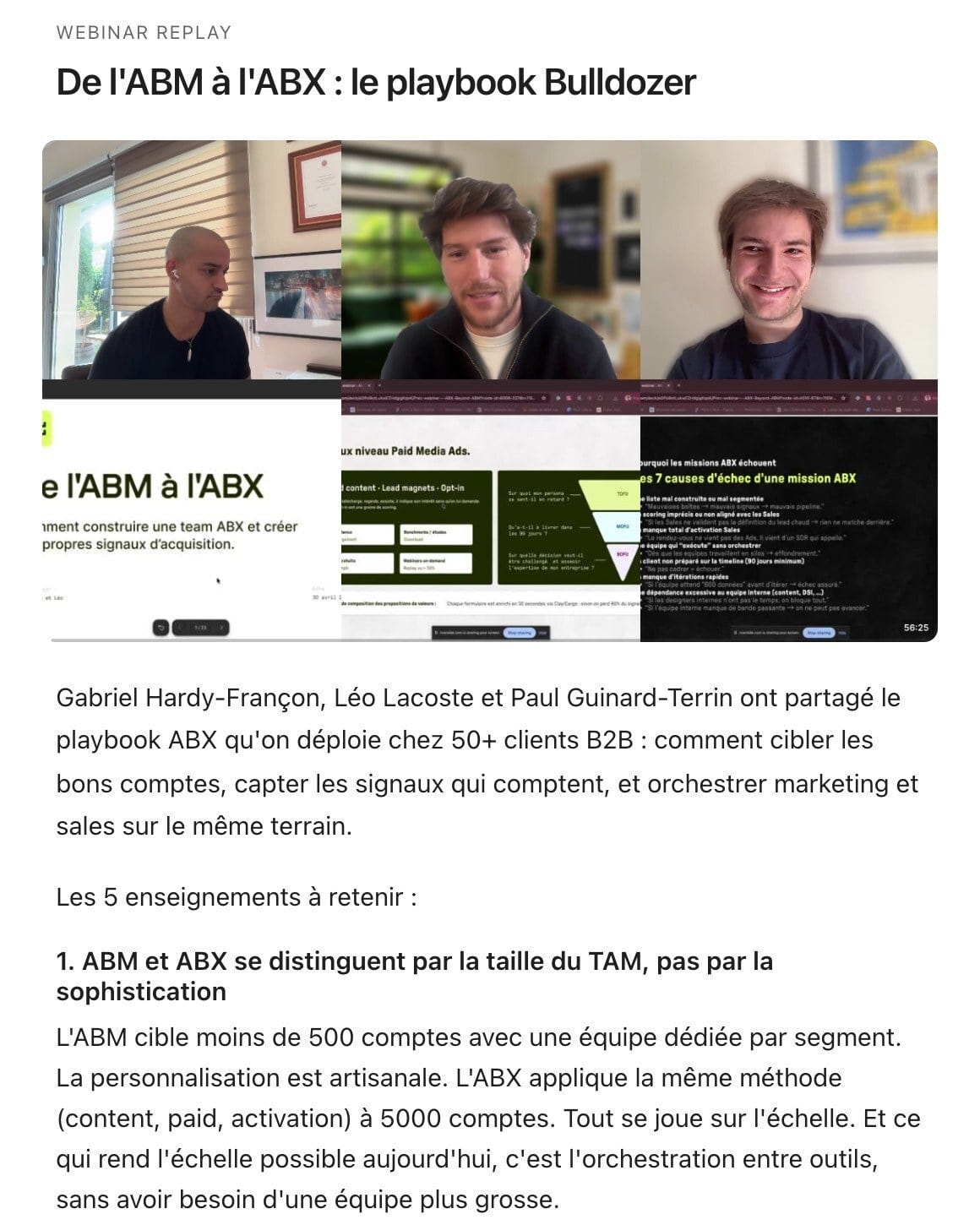
Our ABX webinar recap (in French), ready ten minutes after the live session
So you can make the call the same day, after clicking through the real thing.
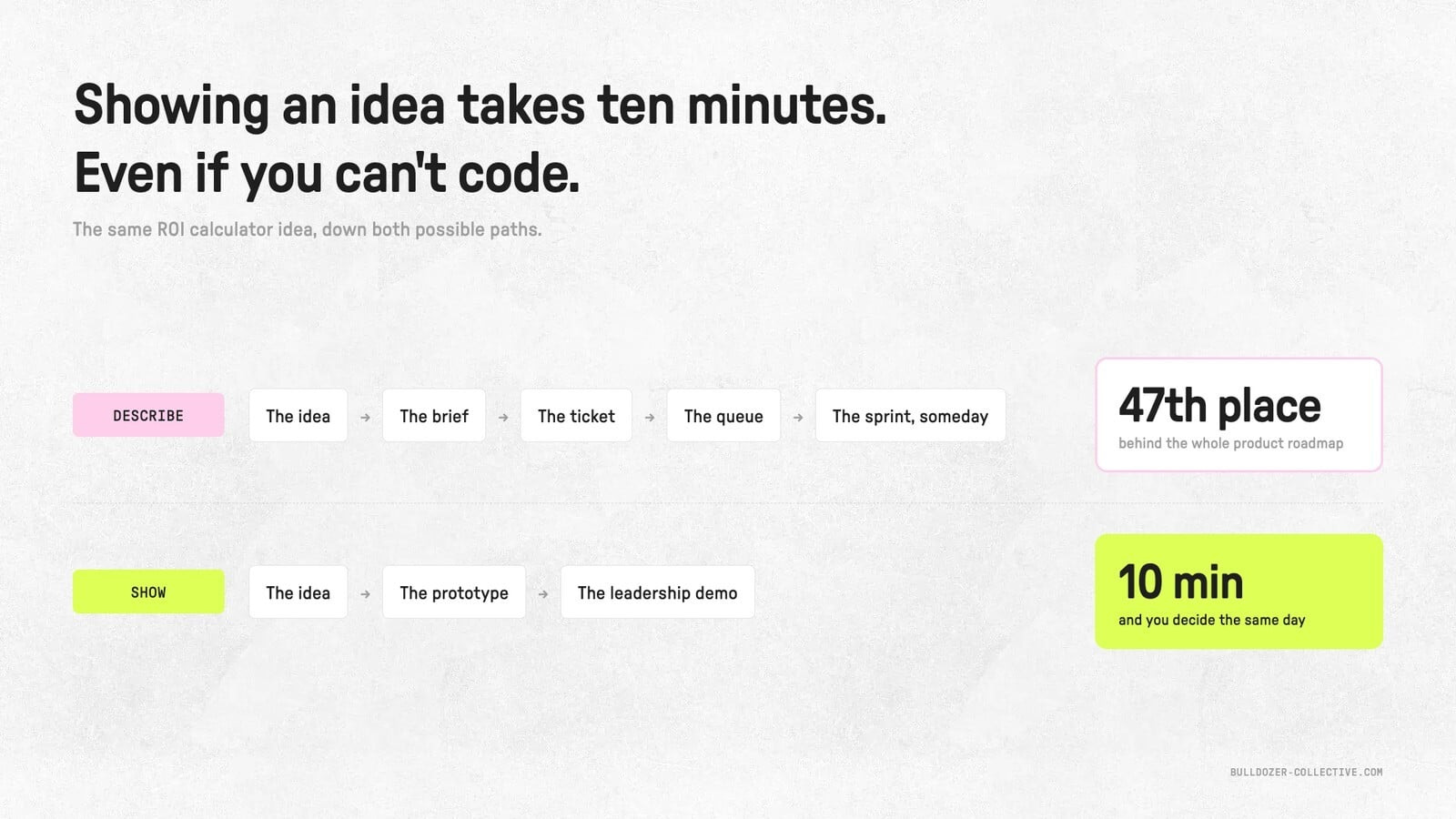
One idea, two paths
I know what you’re thinking, and it’s a fair objection. A prototype a marketer hacked together isn’t a product. It’s not secure, nobody maintains it, and your IT or legal team will block it long before it goes live.
True. BUT nobody’s asking you to ship it to production. The prototype replaces the brief. That’s it. Your product team gets something that works instead of a three-page doc, and they save time too.
Four things you can show tomorrow
1️⃣ The idea, to your CEO
In the leadership meeting, instead of commenting on a slide, your CEO clicks through the tool. And the question shifts from “would this work?” to “when do we launch?”
Still, keep Verna’s test in mind: if we removed this tool tomorrow, what would break? If the answer is “nothing,” it was just a demo.
2️⃣ The program, to your client
This is where we use it most. On an ABM engagement, we no longer send a monthly PDF report. The client has their own control tower, open whenever they want, with their target accounts and every signal on each one.
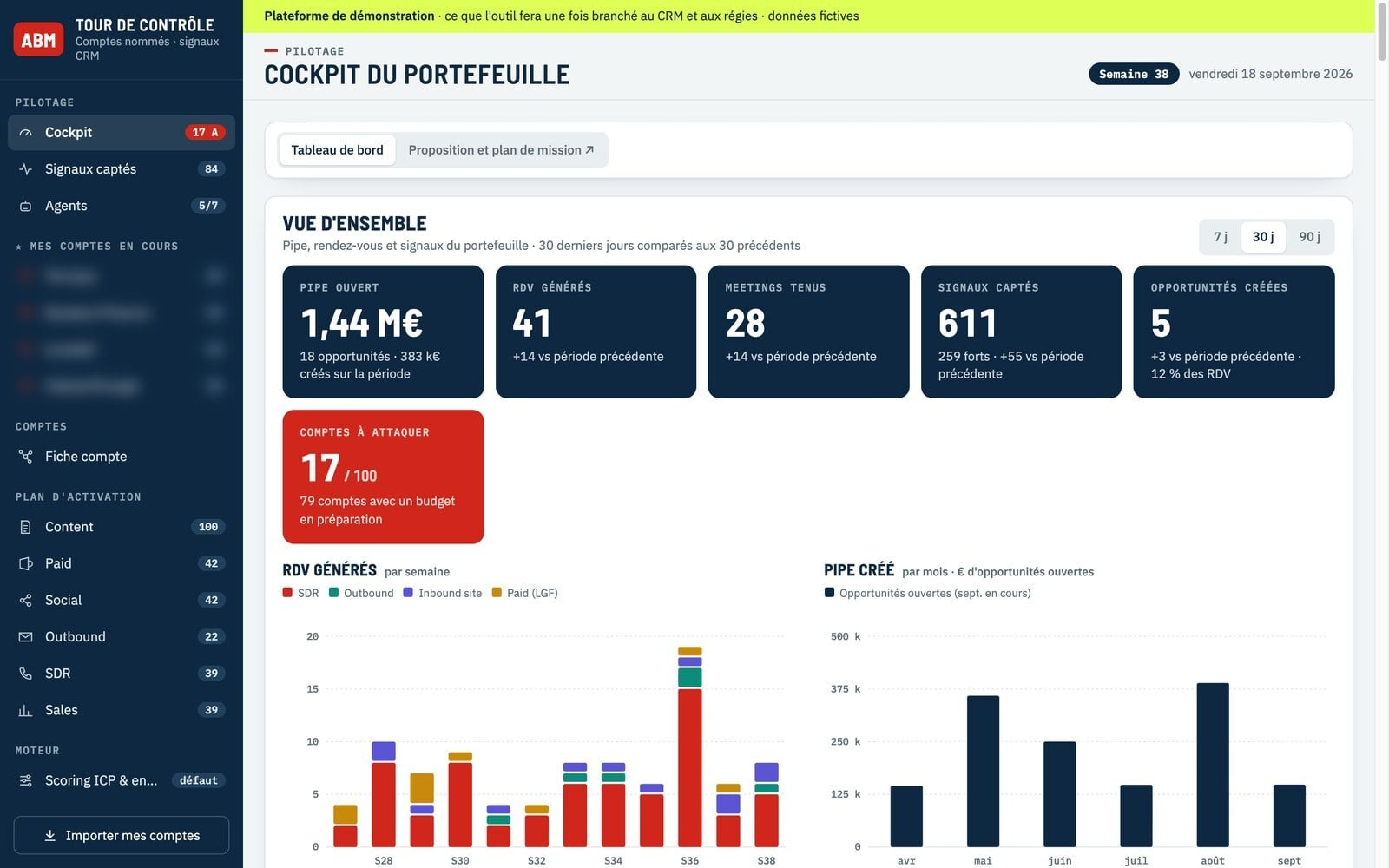
Our ABM control tower (demo data, account names blurred)
My favorite screen is the ICP × engagement matrix. Each dot is an account: the ICP score tells you whether it’s worth going after, engagement tells you whether it’s ready to talk. One glance, and you know who to call this week and who needs a nudge.
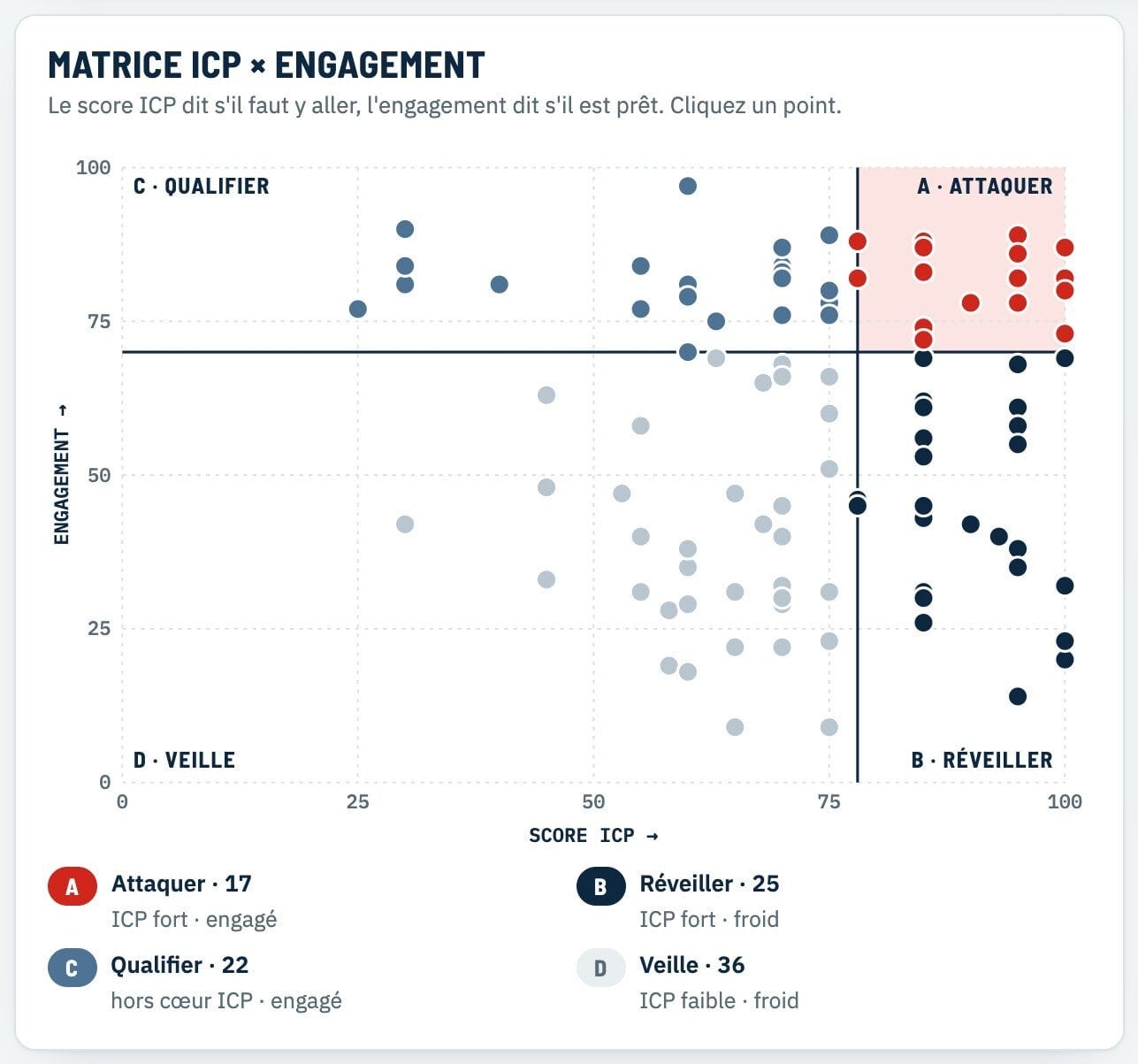
The ICP × engagement matrix, one dot per account
Same with lead magnets: we show the mockup before writing a single line, and the client picks after seeing the result.
3️⃣ The tool, to your market
An ROI calculator or an automated site audit beats an ebook on the same topic. Your prospect walks away with THEIR number, not a PDF they’ll (maybe) open in two days.
And the tools you pay a subscription for, you can now build yourself. Our visit tracker, which pings us on Slack the moment a document is opened, with the person’s name, was built in-house by someone who isn’t an engineer.
We’ve built four more internal apps over the past two months. Each one answers ONE question we used to ask every single week.
Who should we ask for a testimonial, and when? The app cross-checks client feedback, invoices and churn risk, then tells us who to ask and who to leave alone.
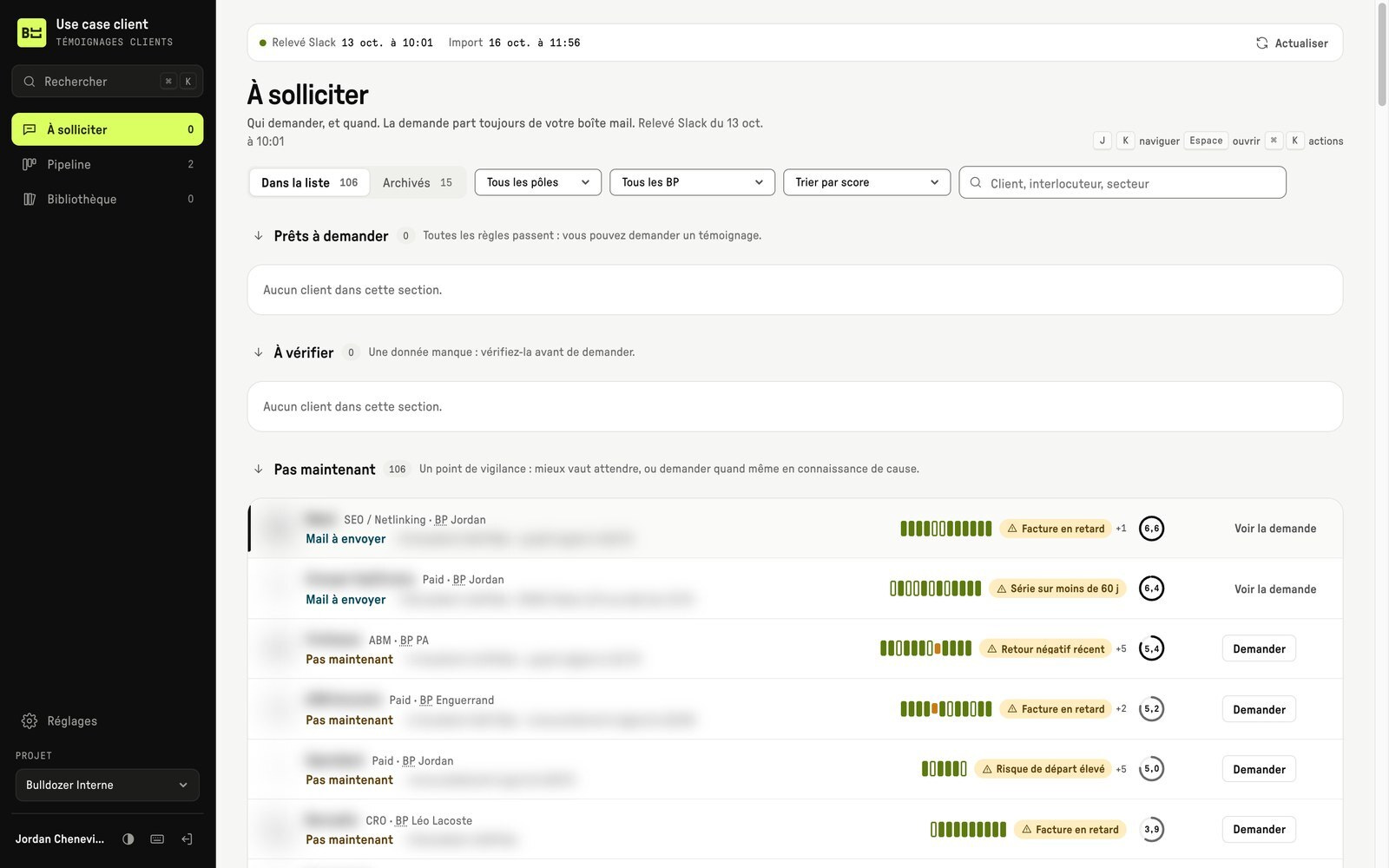
Client testimonials: who to ask (names and logos blurred)
How are Rise registrations going? Rise is our event for marketing leaders, in Paris on November 17. The app tracks how many of our targets have signed up and the mix of clients vs. new business, refreshed every morning from HubSpot.
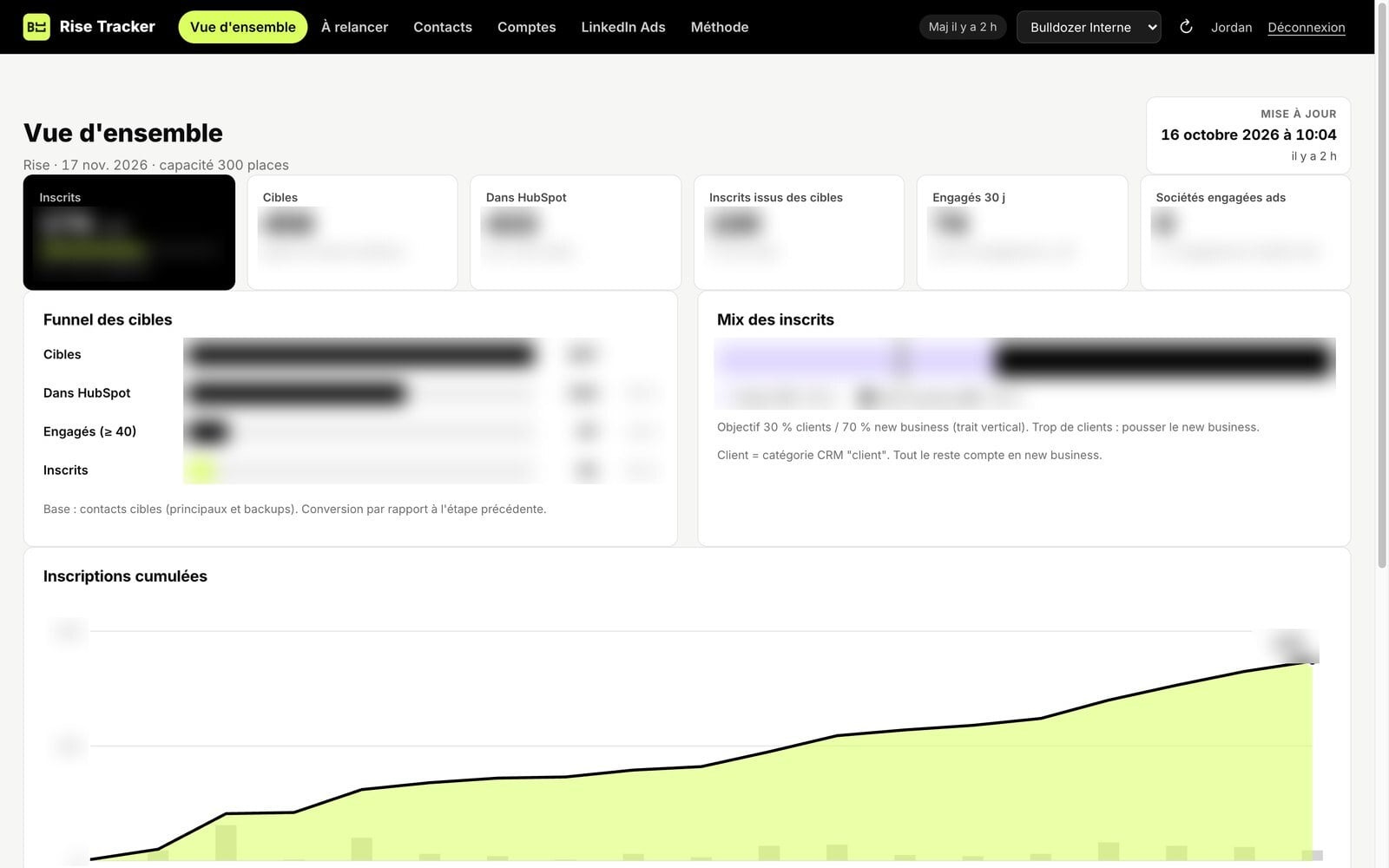
Rise Tracker overview (numbers blurred)
What do our webinars actually bring in? Every webinar is wired into HubSpot: registrants by tier, then the deals that come out of it.
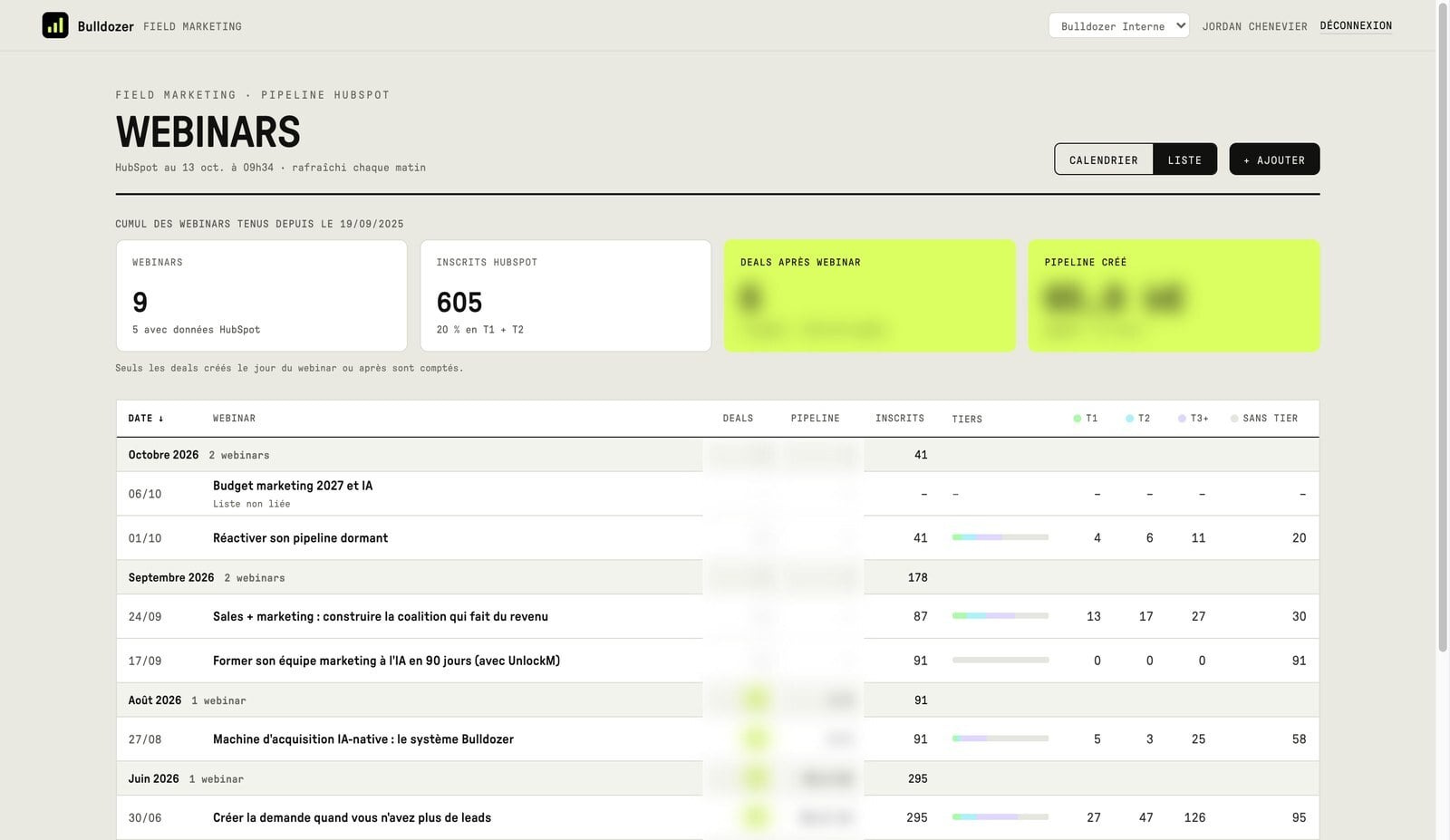
Every webinar connected to HubSpot (deals and pipeline blurred)
Who’s posting what on LinkedIn this week? One calendar for the whole team, and posts go out on their own, right on schedule.
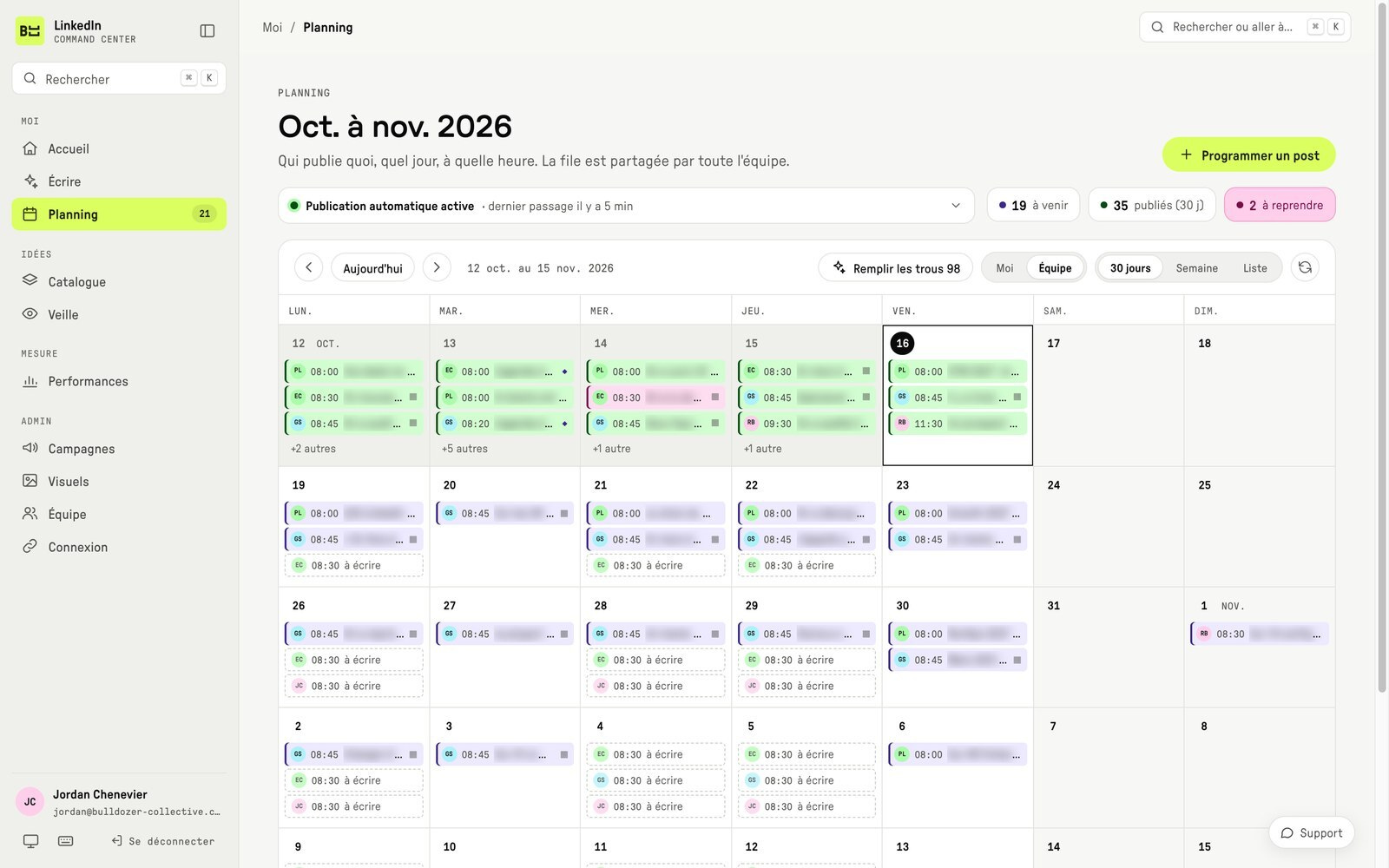
LinkedIn Command Center, the team calendar (post copy blurred)
4️⃣ Yourself, to your next hiring manager 🚨
With AI, everyone sounds like an expert. MCP, RAG, agents… everyone has the jargon down! So hiring managers want proof. I think a hands-on case study on a real brief will replace the interview where everyone talks about what they can do.
Same thing internally: the person who walks into the meeting with a working version beats the one with a slide. Every time.
And the field is still wide open. Tim Soulo estimates that 9 out of 10 marketers have never built an app with AI. Most of them know it’s possible… they just haven’t started.
Your résumé says “AI-fluent”? Cool. Show me.
Ten minutes, with one catch
Your first prototype will take an hour, not ten minutes. And that’s fine!
You earn the ten minutes. Our webinar recap ships in ten minutes because our brand guidelines, our context and our Claude skills were written ONCE. That machine took us months to build (I wrote about it in The era of the “AI marketing OS”).
Your first prototype doesn’t need a machine. Your hundredth does.
From brief to prototype
1️⃣ No idea goes to a leadership meeting without a clickable version.
The brief becomes the appendix.
2️⃣ Start with a task you do by hand every week.
Your Monday report, or prep for a client meeting. Claude Code or Lovable is enough to get going, plus two hours blocked in your calendar each week.
3️⃣ Put in writing who does what with product and IT.
Prototypes, internal tools and demos sit with marketing. Production, customer data and security sit with engineering. One page is enough, and it saves you a cold war with the product team.
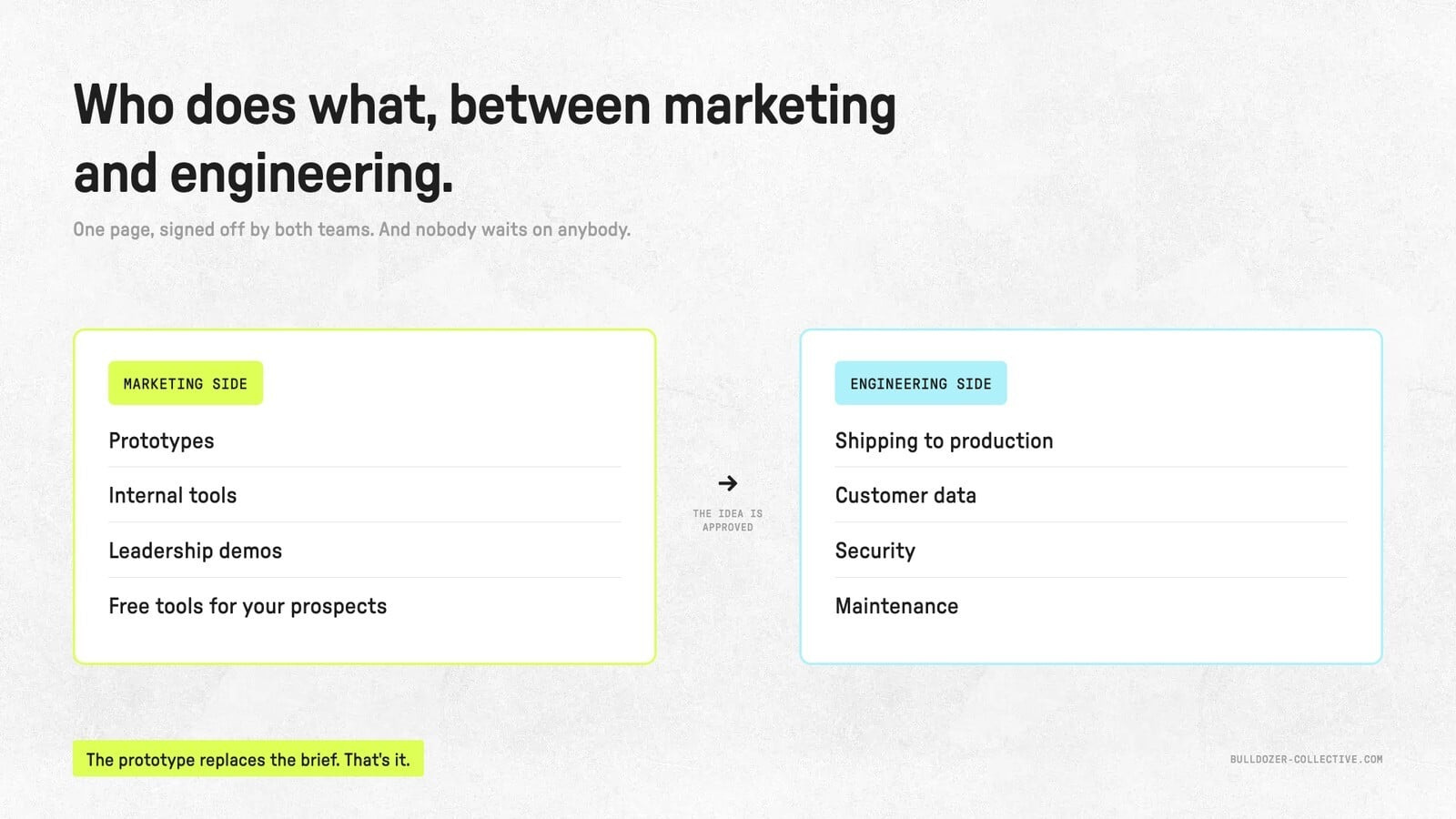
Who does what, between marketing and engineering
And yes, this is something we help with.
Ticket or prototype
You can keep describing your ideas and waiting your turn in 47th place. Or you can show them tomorrow morning.
Your ideas were good. They were just missing proof.
(I didn’t open a single ticket for this email.)
Let’s grow 👊
— Jordan