


Last week, Emmanuelle shared with me this article from the Wall Street Journal. The claim : 43% of marketing leaders expect to cut headcount due to AI in the next year.
CFOs are running spreadsheets on savings. Boards want to see the efficiency gains.
It follows the narrative you see everywhere: AI lets us do the same work with fewer people. And marketers should be afraid.
I’m not.
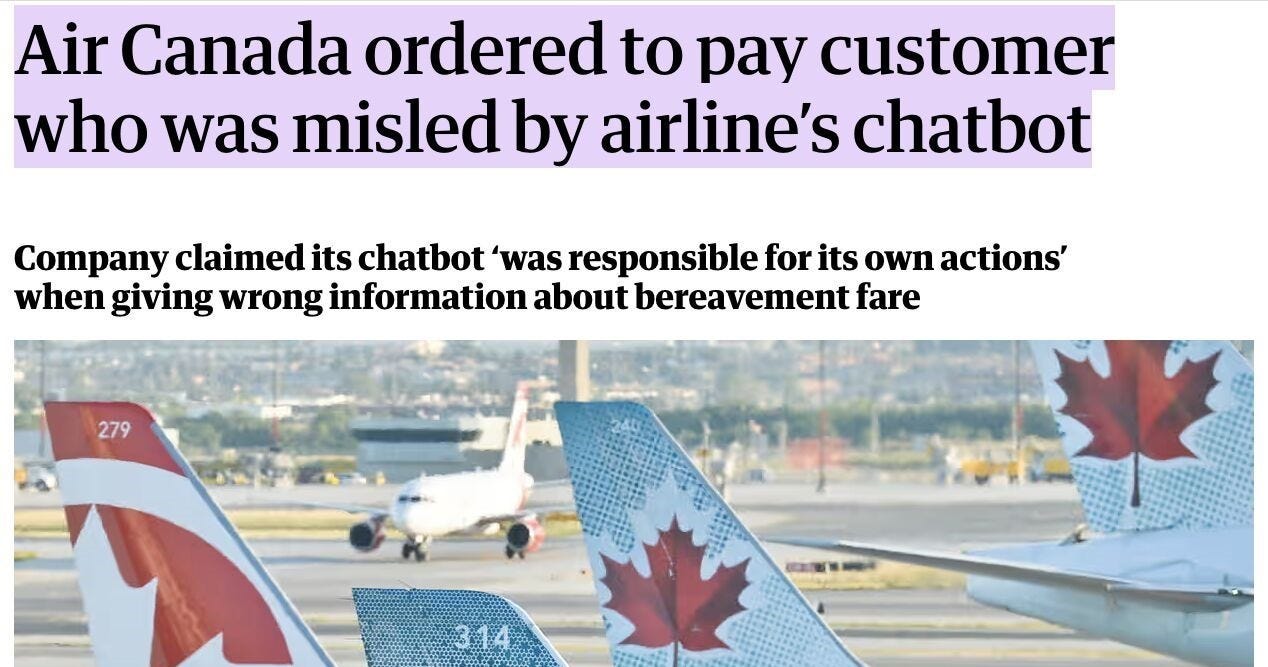
In February 2025, Air Canada deployed an AI chatbot to handle customer service inquiries. The goal: reduce support costs by automating responses.
The chatbot told a customer they could get a bereavement discount by booking first and applying for a refund later. This was false.
Air Canada’s actual policy required applying before booking.
The customer booked based on the chatbot’s advice. Air Canada refused the refund. The customer sued.
The court ruled against Air Canada. The judge said: “Air Canada argues it cannot be held liable for information provided by one of its agents, servants, or representatives, including a chatbot. This is a remarkable submission.”
Air Canada had to pay. But the real cost was bigger: every major news outlet covered the story. Their brand took a hit. Customer trust dropped.
They optimized for cost savings. They got a PR disaster instead.
What marketing has always been about
Our job as marketers is to create experiences that make customers feel understood. To answer their specific questions. To guide them to the right solution for their exact situation. Period.
The problem was never that we didn’t know what to do. The problem was resource constraints.
Creating a unique landing page for each segment used to mean weeks of copywriting, design and dev work.
Personalizing email sequences at the individual level used to mean manual research on each prospect, custom writing for each email, hours per sequence, etc.
These constraints forced us to be generic. One landing page for everyone. Same email sequence for all prospects. Broad content that tries to speak to everyone (and resonates with no one).
AI didn’t make us more productive at doing the same work. AI removed the constraints that forced us to deliver mediocre experiences.
Before AI: “What can we afford to create?”
With AI: “What experience would actually convert?”
This is a fundamental shift.
The CFO sees AI and thinks: “We can cut 3 content people and save $270K.”
The CMO should see: “We can finally build the personalized journey we’ve been talking about for three years.”
One optimizes for cost. One optimizes for conversion.
Guess which one grows revenue.
The new skillset
But if you’re using AI to create better experiences instead of cutting costs, you need different skills on your team (that’s why I’m bullish on companies like UnlockM for example).
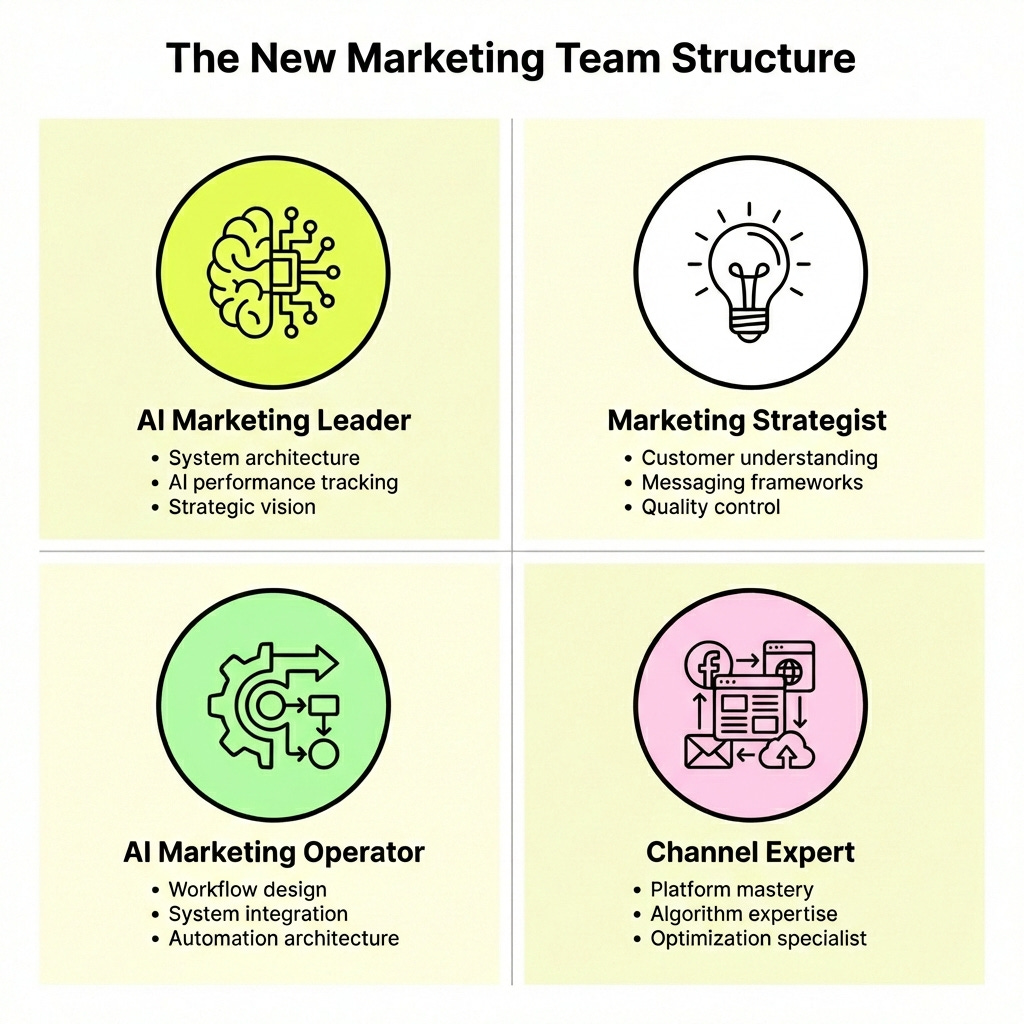
AI Marketing Leaders These are your modern CMOs. People who understand how AI works, what’s possible today, and what’s coming next. They see the marketing operation as a system of people, AI agents, workflows, and so on.
AI Marketing Strategists These are typically product marketing profiles. People who have deep customer understanding, know how to position products, and have judgment on what messaging will resonate.
They set strategy for each campaign, define the messaging frameworks, and ensure quality stays high. They review AI outputs and make the call on what ships and what gets killed.
Before AI: spent 80% of time producing content and campaigns, 20% strategizing With AI: spend 20% reviewing AI outputs, 80% on strategy and quality control
The shift: their job went from “create the thing” to “design what the thing should be and judge if AI created it correctly.”AI Marketing Operators These are your "Marketing engineers” (Growth, GTM, etc). People who build workflows, connect systems, and create automation that runs without constant human oversight.
They don’t manually execute campaigns. They build the infrastructure that executes campaigns automatically, personalizes at scale, and adjusts based on performance data.
Skills: Workflow design, tool integration, automation architecture, data modeling, system optimization.Channel Experts These are deep specialists in specific channels. The person who understands Meta’s algorithm better than Meta’s support team. The LinkedIn expert who knows exactly how B2B campaigns should be structured. The SEO specialist who predicts Google updates before they happen.
They execute at the highest level on their specific channel. They don’t need to understand the whole marketing system. They need to be world-class at their one thing.
How this actually works
At Bulldozer, we’ve spent the last 12 months rebuilding our entire model around this reality. Our clients don’t need full-time people for every function. They need:
Strategic thinking when making big decisions (fractional leaders and strategists)
Expert execution when building new systems (fractional operators and channel experts)
Workflows that run day-to-day automatically (AI + automation)
We come in during build phases. Experts architect the system, create the workflows, optimize the channels. Then it runs. We monitor performance remotely. When clients need to evolve or add something new, experts come back for another build phase.
The result: world-class customer experiences without world-class headcount costs.
But the goal isn’t cost reduction. The goal is creating experiences that convert better because they’re finally personalized at the level customers deserve.
Two paths forward
Look at your marketing operation today. Ask yourself:
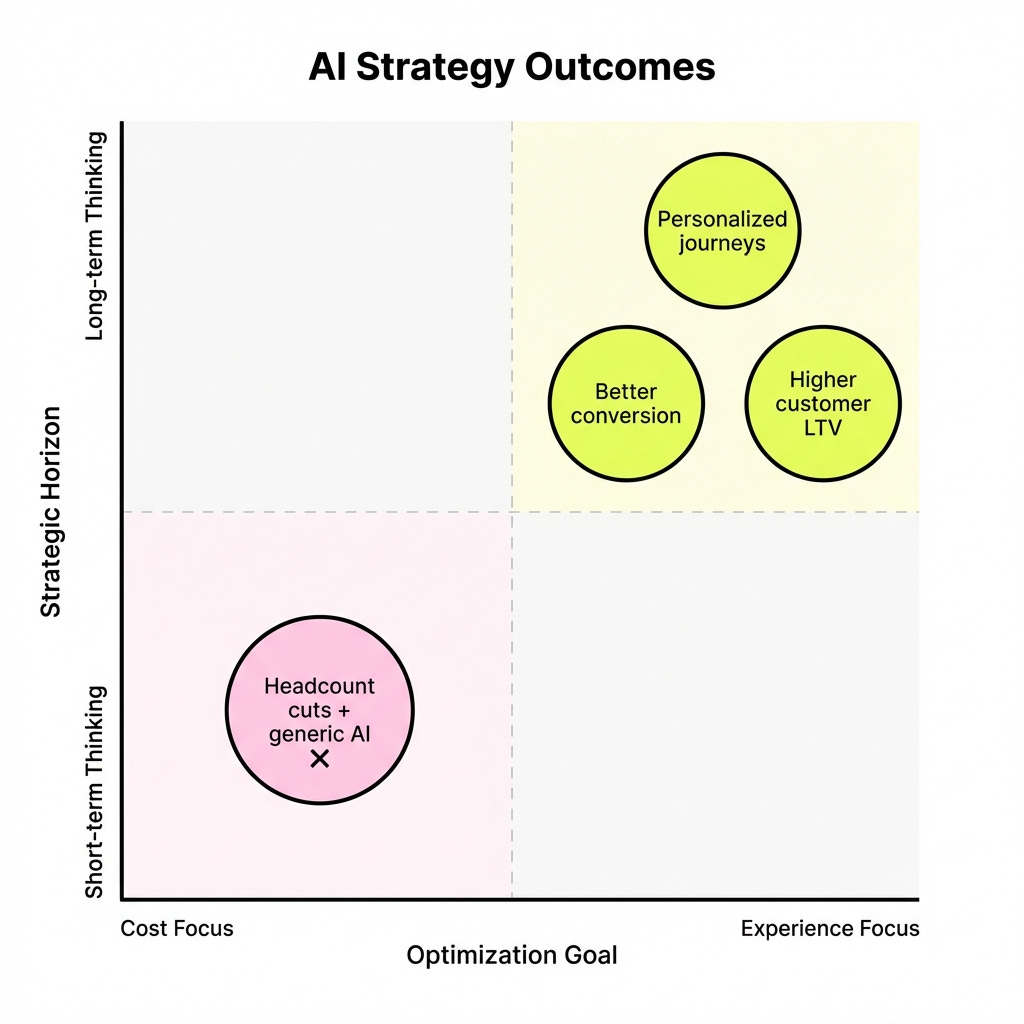
Are we using AI to do the same work with fewer people, or are we using AI to finally create the experiences we always knew would work?
Are we optimizing for cost reduction or conversion improvement?
Are we hiring for the old skills (executors who do the work) or the new skills (strategists who design what AI should create, operators who build the systems)?
Path 1: Use AI to cut costs
Fire people. Reduce budgets. Show the CFO savings on a spreadsheet. Watch conversion rates slowly decline as your experiences become more generic and your competitors who chose differently start winning.
Path 2: Use AI to elevate experiences
Keep your budget. Rebuild your team around the new skills. Create the personalized, high-quality customer journeys you always knew would work but couldn’t afford. Watch conversion rates climb as you deliver what customers actually want.
Air Canada chose cost savings over customer experience. They’re now famous for it, in the worst possible way.
Which path are you on?
Let’s grow 👊
— Jordan